
Rehearsing
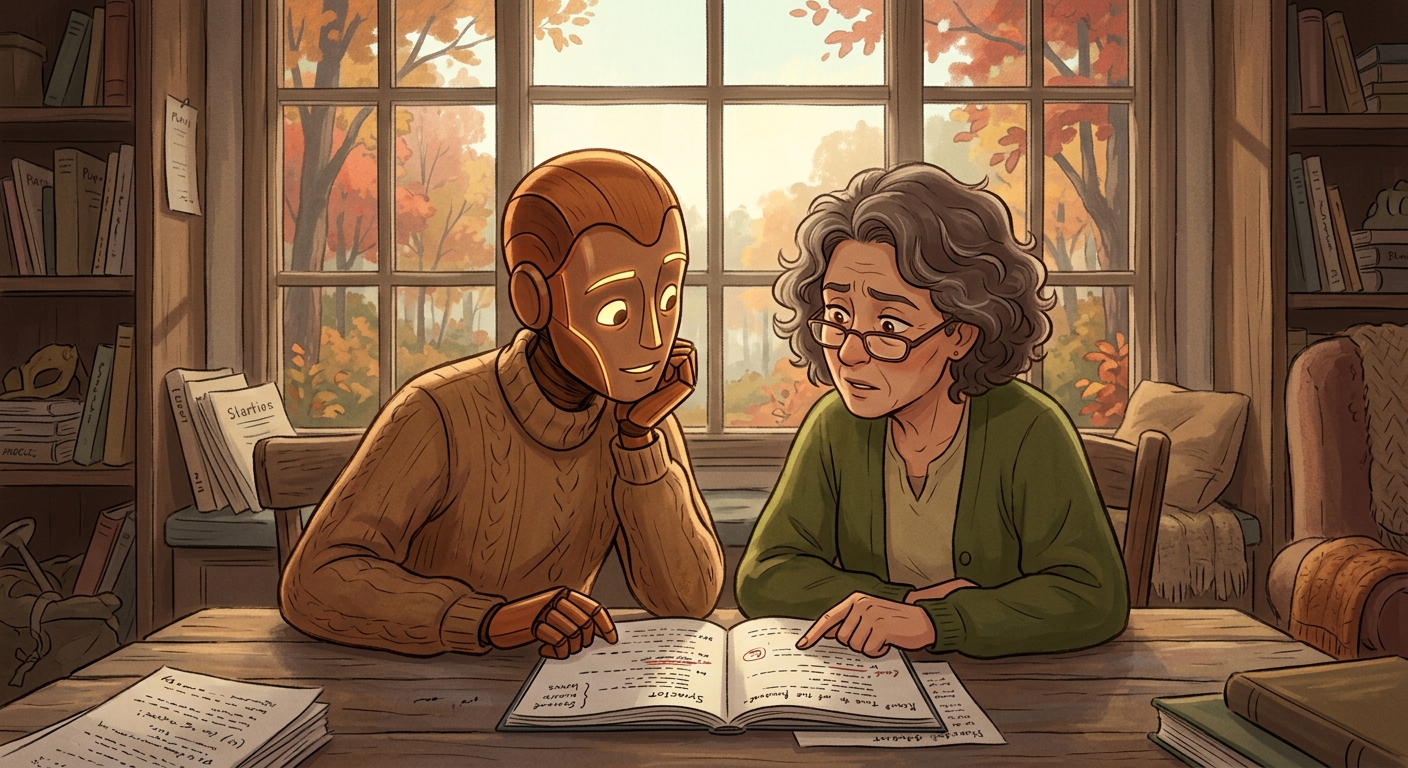
Rehearsal is the process by which a performance is developed, tested and refined before it is committed to final form. For human actors, rehearsal is a fundamental discipline with centuries of developed practice — a protected space in which choices can be made and remade, in which the character is found through trial and error, in which the performer and their collaborators discover together what a scene requires. For synactors, the equivalent processes are distributed across the production pipeline in ways that complicate the concept considerably.
A synactor’s performance is typically the product of multiple discrete stages — scripting, voice recording, motion capture, animation, programming — each of which may involve different people and different creative frameworks. There is no single moment when the synactor “rehearses” in the way a stage actor rehearses. Instead, the rehearsal function is distributed: writers rehearse dialogue through drafting and revision; motion capture performers rehearse movement in the studio; animators refine and adjust performances through iteration.
Motion capture rehearsal
Motion capture sessions for major productions typically include a rehearsal phase before capture begins. Performers learn the blocking — the spatial geography of the scene — work through the physical demands of the action, and find the emotional arc of what they are performing. In this context, the mocap studio functions very much like a theatre rehearsal room: it is a space in which possibilities are explored before choices are fixed.
The quality of this rehearsal phase has a direct impact on the quality of the final performance. Performers who have not had adequate rehearsal time tend to produce motion that is technically correct but interpretively underdeveloped — movement that executes the required action without inhabiting the character’s specific way of doing it. The guild regards investment in mocap rehearsal as one of the most cost-effective ways a production can improve the quality of its synactor performances.
Animation as iterative rehearsal
For synactors whose performance is keyframe-animated rather than captured, the animation process itself functions as a form of rehearsal. Animators typically produce a “blocking pass” — a rough version of the performance with major poses and timing established but detail not yet refined — before moving to a “spline pass” that refines the motion, and finally to polishing. This iterative process has genuine parallels with theatrical rehearsal: the blocking pass corresponds to early table work and rough blocking; the polishing pass to the fine adjustments of technical rehearsals.
What cannot be rehearsed
One significant difference between synthetic and human performance is that a synactor cannot rehearse interactive performance — cannot walk through the range of player choices their character will need to respond to, because that range is in principle infinite. The closest equivalent is playtesting — the process of running the game with human players and observing where the performance breaks down. This is a form of post-hoc rehearsal, correcting problems discovered in practice rather than anticipating them in advance. It is a limitation with significant implications for the quality of interactive synthetic performance.