


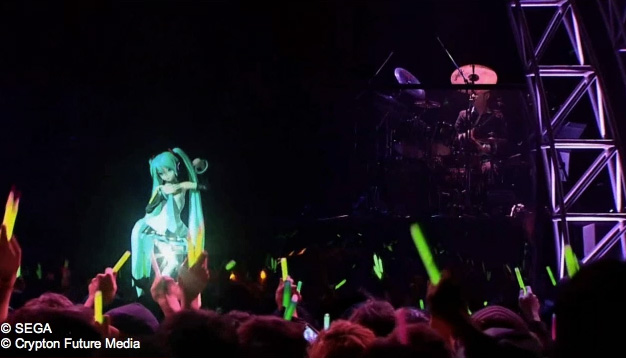
Synactors on stage

A synthetic figure projected on a near-transparent stage screen, live audience in silhouette before them.
The synthetic performer on stage. AI-generated using ChatAI. Use subject to ChatAI Terms of Service.

The stage presents particular challenges and particular opportunities for synthetic performance. It is the oldest and most intimate of performance contexts — a live audience, a shared physical space, the unmediated presence of performers and spectators in the same room. Most of what synactors do occurs at one or more removes from this condition: the audience experiences the performance through a screen, through a game interface, through a recording. Stage performance removes these mediations, and in doing so raises the stakes considerably. An audience sitting in a theatre with a synthetic performer has no pause button, no distance, and no tolerance for the kinds of failure that a player at home might charitably overlook.

As of the guild’s founding, no fully autonomous synthetic actor had performed on a theatre stage to a live audience. What had been achieved was something related but distinct: the projection of pre-rendered synthetic performance onto a stage space, creating the illusion of live presence. The distinction matters, but it should not obscure how significant these projected performances have already been.

Hatsune Miku and the holographic concert

The most celebrated example of this form is Hatsune Miku — a virtual singing character developed by Crypton Future Media using Yamaha’s Vocaloid voice synthesis software. Miku has performed to large live audiences in Japan and internationally since 2009, appearing as a projected figure on a near-transparent stage screen, backed by live musicians. The performances are technically pre-rendered sequences rather than live synthetic performance in the strictest sense — the figure moves through choreographed routines rather than responding to the audience in real time — but the audience’s engagement is unmistakably that of a live concert experience. Miku’s concerts sell out venues of several thousand seats; her audience brings light sticks, sings along, and responds to her with an intensity of collective attention that the presence of a human performer could not reliably exceed.

Miku’s success demonstrates several things of significance to the guild. First, that audiences are willing to extend the same emotional investment to a synthetic performer in a live context that they extend to a human performer, provided the performance is sufficiently engaging. Second, that the conventions of pop concert performance — its choreography, its lighting, its call-and-response relationship between performer and crowd — translate effectively to synthetic performers. Third, and perhaps most importantly, that the liveness of a performance is a quality audiences can perceive and respond to even when the performer is not physically present in the conventional sense. The audience at a Miku concert knows it is watching a projection. It does not experience the performance as less live for knowing this.

ABBA Voyage and the digital resurrection concert

The ABBA Voyage concert experience, which opened at a purpose-built arena in London in May 2022, represents a significant development of the holographic concert format. Industrial Light & Magic spent several years producing digital versions of the four ABBA members as they appeared in the 1970s, based on extensive performance capture sessions with the living members of the group. The resulting “ABBAtars” performed a fixed setlist in a purpose-built 3,000-seat venue designed specifically around their technical requirements, accompanied by a live band. The experience ran continuously for over two years to sold-out audiences.

The ABBA Voyage model differs from Miku’s in one crucial respect: the performers being represented are real historical people, and the digital versions are explicitly presented as reconstructions of them at a specific moment in their past. This raises questions the guild finds productive rather than merely troubling. The ABBAtars are not claiming to be the living Agnetha, Björn, Benny and Anni-Frid; they are performances of those people as they were, presented through a medium that makes visible its own artificiality. The audience’s emotional response — which by all accounts was considerable — was to something that was simultaneously a concert and a memorial, a performance and a document.

Reconstructed performers and the ethics of posthumous presence

The use of holographic or projected technology to place deceased performers on stage has a shorter and more contested history. The projection of a synthetic Tupac Shakur at the Coachella festival in 2012 — technically a Pepper’s Ghost illusion rather than a true hologram — attracted enormous attention and significant discomfort. The performance was visually effective; the ethical objections centred on consent. Shakur had not agreed to posthumous performances of this kind, and his estate’s authorisation, while legally sufficient, did not resolve the question of whether a performer’s image and likeness should be deployable in new performance contexts after their death without their prior consent.

Similar questions have been raised about subsequent posthumous reconstructions, including projected performances by Michael Jackson and Roy Orbison. The guild’s position, stated also in the film section, is consistent: the reconstruction of a deceased performer for new performance contexts requires documented prior consent, and its absence is not adequately compensated by estate authorisation or technical achievement.

Theatrical robotics and physical stage presence

A parallel strand of synthetic stage performance avoids projection entirely in favour of physical robotic presence. The work of the Japanese roboticist Hiroshi Ishiguro — whose androids Geminoid HI and Geminoid F have appeared in theatrical productions in Japan and Europe — represents the most sustained exploration of what a physically present synthetic performer can do in a dramatic context. Ishiguro’s androids have appeared in productions directed by Oriza Hirata at the Osaka-based Seinendan Theatre Company, performing alongside human actors in pieces that deliberately foreground the question of what distinguishes human from synthetic presence. The performances are not technically accomplished by the standards of digital character work — the androids’ movement is limited and their facial expression constrained — but their physical presence in the same space as human performers and audience members creates an experiential quality that no projection can replicate.

The question of genuine liveness

The gap between pre-rendered and genuinely live synthetic stage performance — between a performance that was made in advance and one that is happening now, in response to this audience, in this room — remains the most significant frontier in synthetic stage performance. Vocaloid and similar synthesis systems could in principle support genuinely live vocal performance; real-time rendering engines could in principle support genuinely responsive synthetic visual presence. What has not yet been achieved is a synthetic stage performer capable of the full range of responsiveness that live performance requires: reading a room, adjusting to an unexpected reaction, finding in the specific energy of a specific audience the particular performance that the moment calls for.

The theatrical possibilities beyond the concert format — synthetic actors in dramatic productions, responding to other performers, capable of genuine spontaneity within a scripted framework — remain largely unrealised at professional performance quality. The experimental work of companies such as Seinendan and the ongoing development of LLM-driven interactive agents suggest that this frontier will not remain uncrossed indefinitely. The guild considers this territory among the most exciting in synthetic performance, and will review the first productions that seriously engage with it at the level of craft the form demands.